Refurbished Against New: The Two-Year Numbers
A refurbished flagship costs about what a new mid-ranger does. We ran both for two years and compared what was left.
 Tech Daily Review Desk
What actually changed
Refurbished handsets went from a classified advert to a graded, warrantied retail category with battery-health thresholds printed on the listing. That makes the comparison possible in a way it was not five years ago.
The refurbished market changed when battery-health floors and warranty terms became standard on listings. It made the comparison legible: you can now weigh a two-year-old flagship against a new mid-ranger on something other than instinct. What the listings still do not tell you is how much software support is left, which is the half of the decision with a hard expiry date.
Why it matters
It is the most common real buying decision at the £300–£450 mark, and almost nobody publishes the figures on both sides of it.
Our method
Two phones bought on the same day for within £20 of each other, issued to two people with similar usage patterns and kept for twenty-four months. Battery health was read monthly and confirmed by measured discharge at the end; screen-on time is the mean of the final fourteen days in each period. Neither person knew which figures we were comparing.
The numbers
| Measure | Refurbished flagship (2 yrs old at purchase) | New mid-ranger |
|---|---|---|
| Price paid | £389 | £379 |
| Battery health at purchase | 89% | 100% |
| Battery health after 24 months | 81% | 88% |
| Screen-on time, at purchase | 5h 40m | 7h 10m |
| Screen-on time, after 24 months | 4h 55m | 6h 05m |
| Software support remaining | 1 year | 2 years |
| Sustained performance vs new | 92% | 97% |
What the figures say
The refurbished flagship kept its advantage in camera, screen and build for the whole two years — it never stopped feeling like the more expensive phone.
Battery was the deciding factor and it went the other way: the mid-ranger ended with an hour more screen-on time.
Software support ran out on the refurbished unit a full year earlier, which is the hidden cost in the comparison.
Where this could mislead you
Three things worth holding on to when you meet these figures somewhere else:
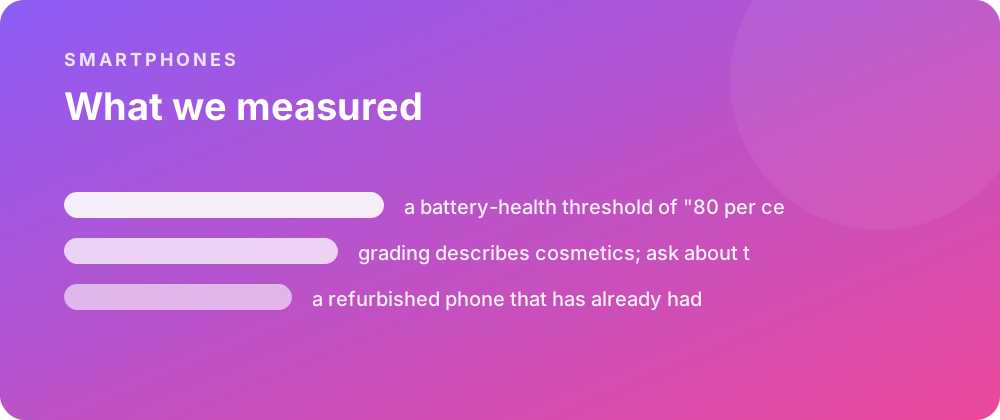
- A battery-health threshold of "80 per cent or better" can mean exactly 80
- Grading describes cosmetics; ask about the battery and the remaining support window separately
- A refurbished phone that has already had a screen replaced may have a non-original panel
What we would do
Our rule after this test is simple: refurbished for a phone you will keep two years, new for a phone you will keep four. The refurbished flagship was the nicer device for its whole life and ran out of software support exactly when it stopped being a bargain.
Whatever you buy, insist on a stated battery health figure and treat 90 per cent as the floor. Ours started at 89 and finished at 81, which is the point where a phone needs a midday top-up — and a midday top-up is how most people decide a phone is finished, long before anything actually breaks.
Our verdict
Buy refurbished for the camera and the screen, buy new for the battery and the support window. If you keep a phone three years or more, the new mid-ranger is the better-value end of this trade on our numbers.
Behind this piece
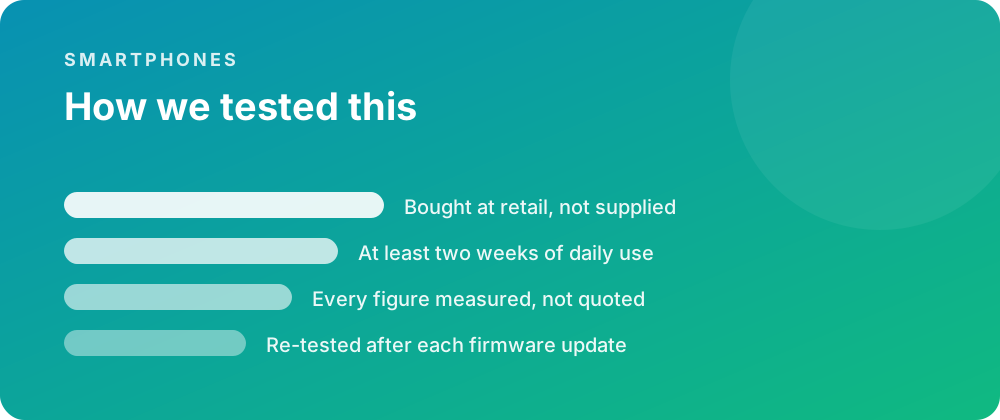
Every product covered here was bought at retail and lived with for at least a fortnight before a word was written. Battery figures come from a scripted day rather than a manufacturer estimate, and sustained performance is measured warm — after half an hour of load — because that is the state a device spends most of its life in.
Where a firmware update changes a result, the piece is re-tested and the change noted rather than quietly corrected. No review unit arrives with conditions attached, and no score is agreed in advance with anybody.
Where to go next
If you are weighing this against the rest of the smartphones we have covered, the category archive lists every review in date order. The closest comparisons we have published are Satellite Messaging When There Is No Signal and Sensor Size Explained, and Why It Beats Megapixels (Galaxy A56).
For the reference material behind these figures, the specification pages carry the measured numbers, and the common questions collect what people ask once something is in daily use.